
Light is how your body tells time
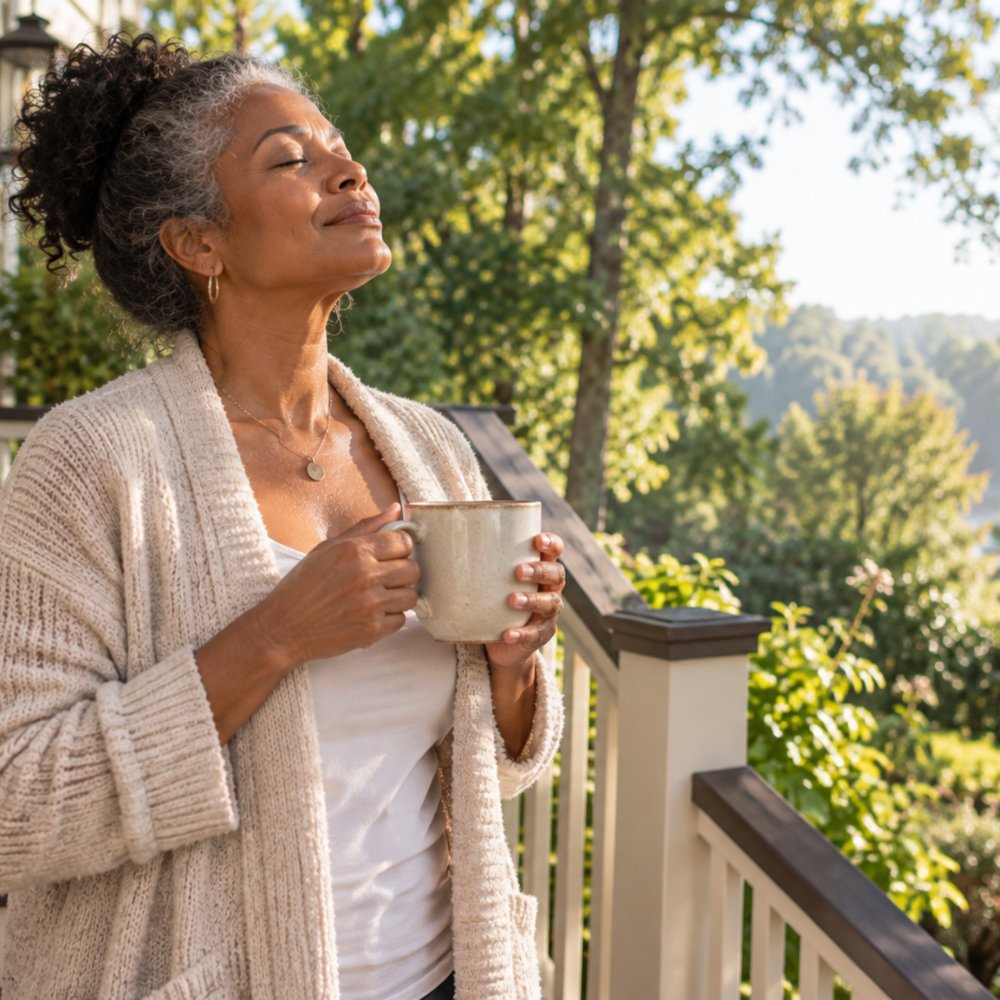
Special cells in your eyes sense daylight and send that signal to your brain's master clock. That's what helps you feel alert in the morning and sleepy at night. This works through your eyes, not your skin, so you don't need sun on your arms for it.
Sleep scientists recommend bright light during the day, dim light for the three hours before bed, and a room as dark as possible while you sleep. Indoor light is usually far dimmer than even a cloudy morning outside.
What the big studies found
In UK Biobank, a study of more than 400,000 adults aged 37 to 73 (54% women), each extra hour spent outside in daylight was linked with fewer insomnia symptoms, less tiredness and finding it easier to get up. It was also linked with lower odds of depression.
In the Nurses' Health Study II, which followed 33,490 women for 16 years, women with more trees visible around their homes had about 6% lower risk of clinician-diagnosed depression.
These are associations. People who feel better may simply go outside more. But they line up with what we know about light and the body clock.
The 120-minutes idea
A study of nearly 20,000 adults in England found people who spent 120 to 179 minutes a week in nature had 59% higher odds of reporting good health and 23% higher odds of high well-being than people who spent none. It didn't matter whether that was one long walk or several short ones. Benefits leveled off around 200 to 300 minutes.
It's a nice target, not a pass/fail test. Nature is not checking your timesheet.