
GHK-Cu
Ingredient · In our GHK-Cu Cream
GHK-Cu (copper tripeptide-1)
GHK is a tiny peptide your body makes on its own. It's found in blood, saliva and urine, it pairs with copper, and levels fall with age. In the lab it plays a part in collagen and skin repair.1

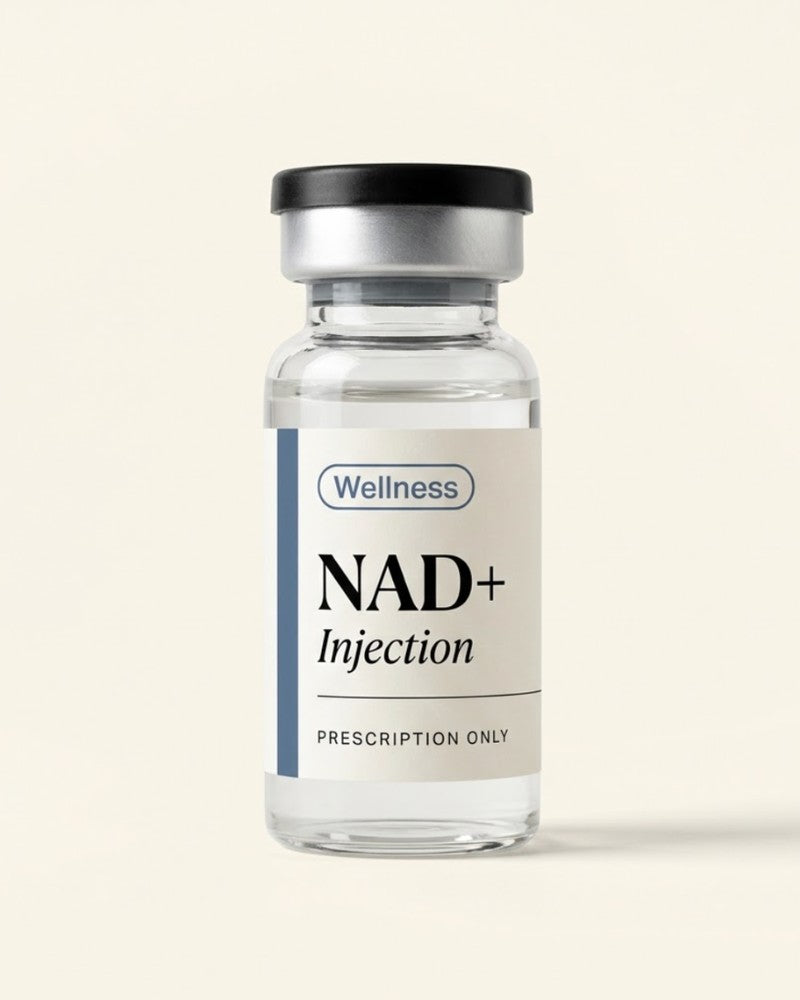
Photo is an illustration, not the medicine. The GHK-Cu in this cream is made in a lab.
Lots of lab research, but only small human trials, mostly of cosmetic face creams. A 2026 systematic review called the human evidence thin and fragmented.2 GHK-Cu is not FDA-approved for any condition, and our cream is compounded by a licensed pharmacy.3
The studies below used FDA-approved products or other forms. Our compounded version hasn't been studied in trials, and results may differ.
What it is
GHK is a three-amino-acid peptide (glycine, histidine, lysine) that binds copper. In cell and animal studies, GHK-Cu nudges skin cells to make collagen and other structural molecules, and to clear out damaged ones.1
Why it's in this product
GHK-Cu is included because of its role in skin repair in lab research, alongside the hope that applying it to skin supports that process.1,2
What the studies in people show
- Systematic reviewSmall trials, mostly face creamsA 2026 review screened 1,247 records on GHK-Cu and kept 64. It found that most human randomized trials are small cosmetic cream studies, and that better ways of getting GHK-Cu into skin haven't yet been tested in a properly sized human trial.2
- ReviewA lot of promise, mostly from the labA 2015 review describes how GHK affects skin repair in cells and animals. It's useful background, but it was written by researchers at a company that sells copper-peptide skin care, which is worth knowing.1
What we don't know yet
How much visible difference GHK-Cu cream makes for fine lines, firmness or texture compared with a plain moisturizer, the best strength, and how well it gets through the skin barrier.2 Better-designed trials are needed.
Safety, in plain English
GHK-Cu is used on the skin and is generally well tolerated in cosmetic studies, though any cream can irritate sensitive skin. Do a patch test first, and tell your clinician about other active skincare you use.
A licensed clinician reviews your health history and decides whether it's appropriate for you. Exploring it here never means you'll get a prescription.
Curious about GHK-Cu Cream?
Start with a free assessment. A licensed clinician reviews your health history and decides whether treatment is appropriate. No pressure, and no prescription unless it makes sense for you.
See GHK-Cu CreamHow care worksSources
- Pickart L, Vasquez-Soltero JM, Margolina A. GHK peptide as a natural modulator of multiple cellular pathways in skin regeneration. Biomed Res Int. 2015;2015:648108. PubMed 26236730
- Najafi N, Maatouk H, Vardanyan KG, et al. A systematic review of the mechanisms and therapeutic applications of GHK-Cu in topical microneedle delivery: a case for expanded clinical trials. Arch Intern Med Res. 2026;9:269-293. PubMed 42787770
- U.S. Food and Drug Administration. Compounding and the FDA: Questions and Answers. FDA
Sources checked November 8, 2026. This page is general education, not medical advice, and it doesn't mean any treatment is right for you. Photos: Unsplash (Majid Shirvani).